Entry · Ref IKOHTMUK
Moving Event Flowers with Less Waste
- Posted
- 2026-11-25
- Last amended
- 2026-11-25
- Account
- @stemjournal45
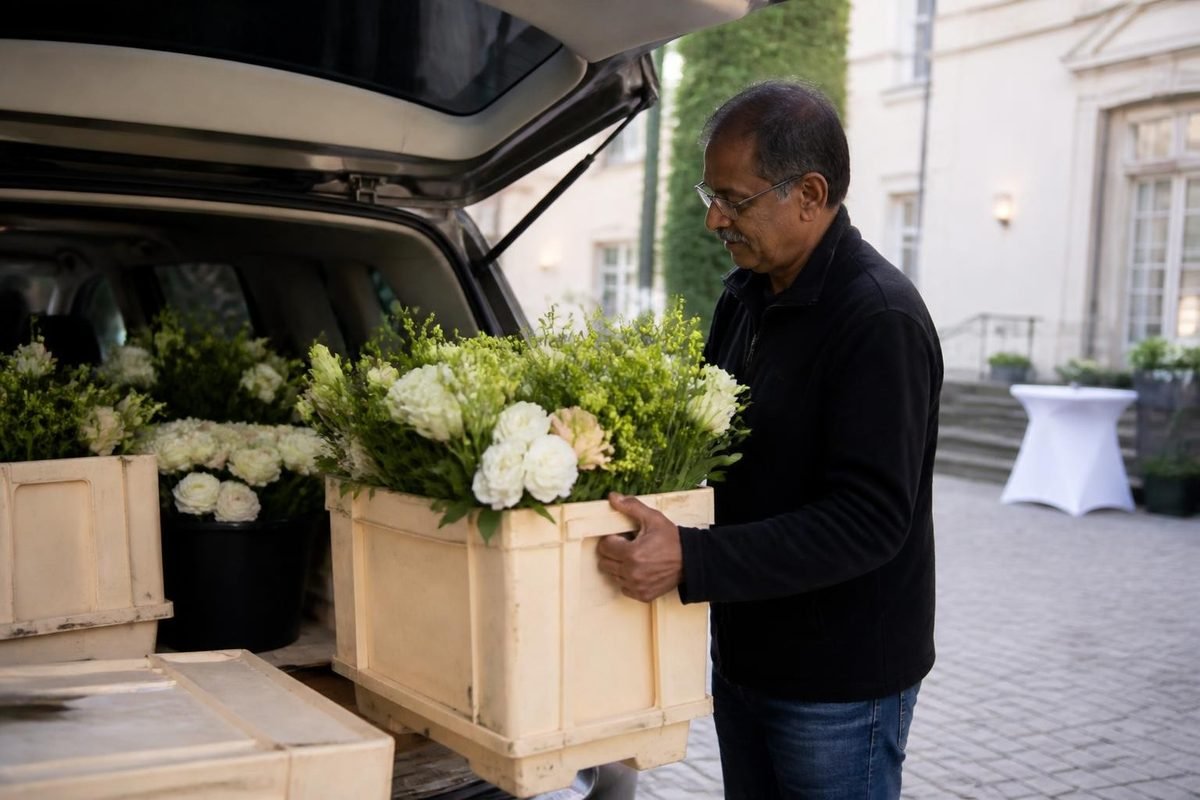
Lower impact flower deliveries rely on fewer, shorter journeys and a vehicle that matches the amount being carried. Reusable packing, secure loading and a planned collection of containers help prevent damage and unnecessary waste.
Match the trip to the schedule and supplies
Build the delivery plan around the event timetable, starting with the venue’s access arrangements. Confirm the hours when deliveries are accepted, the place where a vehicle can unload and the time available to prepare the space. Agreeing on a suitable arrival period can prevent a wasted journey if the venue is not open or the setup area is not ready.
Consider the full load before arranging transport. Flowers, foliage, vases and other materials may be carried together if there is enough room to keep them safe. People bringing supplies from the same area can also look into sharing a delivery instead of making several separate trips. Check the capacity and layout of the vehicle in advance, rather than trying to solve a packing problem at the last minute.
Use a vehicle sized for the load instead of choosing the largest available by default. An electric vehicle may suit the journey if it has enough range and there is a workable charging plan. For a nearby, small event, a cargo bike could carry flowers that are compact and firmly packed. That option depends on the route and weather being suitable.
Nearby-grown flowers may travel a shorter distance to the event, but distance on its own does not show their full environmental impact. Ask the grower or supplier about the flowers’ origin and delivery arrangements. Choosing flowers in season can also make local options easier to find.
Keep flowers safe with reusable packing
Preventing damage matters because spoiled flowers become waste. Pack for the journey rather than trying to fit in more than the vehicle can carry safely. Stand buckets upright in strong crates, then secure them so they cannot shift. Use lids or reduce the water level if splashes could harm the vehicle or nearby supplies.
Reusable packing can take the place of much single use material. Consider using:
- Buckets that can be returned after carrying stems and foliage.
- Durable crates that stack without pressing down on the flowers.
- Clean cloths or reusable padding to keep fragile containers apart.
- Reusable ties that hold bundles in place without squeezing the stems.
During loading and unloading, protect flowers from direct sunlight and heat. For a long trip or flowers that are sensitive to warmth, ask the supplier what temperature control is appropriate. Cooling the vehicle takes energy, but it may be necessary to stop the flowers from deteriorating. Do not leave the vehicle running while waiting if it is not needed.
Plan how containers will come back
Make arrangements for the return trip before delivery day. Decide who is responsible for collecting buckets, crates and vases, and confirm when that person can access the venue. If the delivery vehicle will be travelling nearby again, reusable items may be collected along its existing route rather than through a separate trip.
Check whether the venue can store empty containers during the event. Keep them in one place and mark them clearly so they are not thrown away by mistake. After the event, handle flowers and foliage according to local composting rules. Separate plastic ties and any other materials that cannot be composted, and keep them out of green waste.
A useful transport plan keeps the load to what is needed, protects it throughout the journey and gives reusable containers a clear route back. These practical steps can cut avoidable trips and packaging while helping flowers arrive in good condition.
Read next: flower delivery around the world